November 22, 2012
BY dB0
Comments
11/22/2012
11/04/2012
10/31/2012
October 31, 2012
BY dB0
Comments
10/26/2012
10/21/2012
October 21, 2012
BY dB0
Comments
http://bit.ly/Qzf6rg How McDonald's makes their fries: Video reveals secrets behind the popular potato strips at the fast ... #MailOnline
10/17/2012
October 17, 2012
BY dB0
Comments
October 17, 2012
BY dB0
Comments
Poor poopie stayed home today who knew her twin was gonna be there
October 17, 2012
BY dB0
Comments
10/05/2012
October 05, 2012
BY dB0
Comments
10/02/2012
October 02, 2012
BY dB0
Comments
8/26/2012
August 26, 2012
BY dB0
Comments
8/20/2012
August 20, 2012
BY dB0
Comments
8/17/2012
8/06/2012
August 06, 2012
BY dB0
Comments
August 06, 2012
BY dB0
Comments
8/01/2012
August 01, 2012
BY dB0
Comments
Girl: I think I'm going to be a lumberjack tomorrow.
Friend: But then how will we tell you apart from the hipsters? I mean really, what's the difference between a lumberjack and a hipster?
Girl: One of them has a job.
--Citi Field
Conversation from ''Overheard in New York''
Friend: But then how will we tell you apart from the hipsters? I mean really, what's the difference between a lumberjack and a hipster?
Girl: One of them has a job.
--Citi Field
Conversation from ''Overheard in New York''
August 01, 2012
BY dB0
Comments
1. Thou Shalt Take Advantage Of Optical Illusions
Taking a picture from the top of the body is really popular for beach snaps as the perspective makes your legs look longer and thinner and your chest look larger because it’s closer to the camera.
Also cut off part of your body (to the right) which shaves inches off immediately.
Cropping the picture halfway down your body. Seeing
less of people automatically makes the viewer think they are slimmer.
2. Thou Shalt Always Look Glamorous
Take shots when you're glammed up and ready to go out at the beginning of the night means you will be looking polished.
3. Remember Thy Pose
An old trick that photographers and models have used for years and it’s an easy way to drop a dress size. Stand slightly to the side, breathe in and put your hand on your hip.
Standing sideways always makes you look slimmer than standing straight on in front of the camera and the space created between your waist and your arm gives you shape.
4. Thou Shalt Choose A Simple Background
A simple background means you stand out more, even if you are standing in front of a plain brick wall.
A block white dress is also an attention-grabber because there’s no pattern detail to distract the viewer.
5. Honour Thy Tan
If you can’t tone it, tan it! Sun-kissed skin almost always looks better in pictures, and because the quality of smartphone pictures can’t be guaranteed, the deeper the colour the better the end result.
6. Thou Shalt Use Apps
Different filters and effects on photo apps can make the most boring snap look cool because colour shifting gives an instant editorial feel.
Using Instagram and Hipstamatic give twitpics a bit of retro style, Snapseed is also recommended for easy to achieve bespoke effects.
7. Remember Thy Lighting
Smartphones are quite limited when it comes to focus in tricky lighting situations so daylight is the best to guarantee a good shot.
Also, Late afternoon sun gives a lovely golden light which makes everything look better.
8. Thou Shalt Try A Crop
A tight shot gives more impact, especially when there is a lot going on in the background.
This is also good for showing off statement hair and make-up
9. Honour Thy Angle
For a flattering half-length shot you should always try and take the picture from above the subject, it gets rid of double chins and under-eye bags and the perspective makes you look longer and slimmer.
If it’s a full- length shot getting your friend to bob down while taking it will make your legs look longer.
2. Thou Shalt Always Look Glamorous
Take shots when you're glammed up and ready to go out at the beginning of the night means you will be looking polished.
3. Remember Thy Pose
An old trick that photographers and models have used for years and it’s an easy way to drop a dress size. Stand slightly to the side, breathe in and put your hand on your hip.
Standing sideways always makes you look slimmer than standing straight on in front of the camera and the space created between your waist and your arm gives you shape.
4. Thou Shalt Choose A Simple Background
A simple background means you stand out more, even if you are standing in front of a plain brick wall.
A block white dress is also an attention-grabber because there’s no pattern detail to distract the viewer.
5. Honour Thy Tan
If you can’t tone it, tan it! Sun-kissed skin almost always looks better in pictures, and because the quality of smartphone pictures can’t be guaranteed, the deeper the colour the better the end result.
6. Thou Shalt Use Apps
Different filters and effects on photo apps can make the most boring snap look cool because colour shifting gives an instant editorial feel.
Using Instagram and Hipstamatic give twitpics a bit of retro style, Snapseed is also recommended for easy to achieve bespoke effects.
7. Remember Thy Lighting
Smartphones are quite limited when it comes to focus in tricky lighting situations so daylight is the best to guarantee a good shot.
Also, Late afternoon sun gives a lovely golden light which makes everything look better.
8. Thou Shalt Try A Crop
A tight shot gives more impact, especially when there is a lot going on in the background.
This is also good for showing off statement hair and make-up
9. Honour Thy Angle
For a flattering half-length shot you should always try and take the picture from above the subject, it gets rid of double chins and under-eye bags and the perspective makes you look longer and slimmer.
If it’s a full- length shot getting your friend to bob down while taking it will make your legs look longer.
10. Remember There Is Always Black And WhiteIf all else fails and you really need to post that picture turning a photograph black and white can often save it.
Monochromes pictures are flattering on everyone so they’re great if you’re posing with someone a bit older or uglier, or if anyone is pulling a silly face
7/30/2012
July 30, 2012
BY dB0
Comments
Here are some tips to get those toes ready for your open toe shoes.
2. Buff Away - This extra step that I usually don't do when I paint my nails at home but it really does help. Use a block buffer to remove discoloration, then a glossing buffer until your nails are smooth and look like glass.
3. Scrub those feet - I LOVE my pumice stone. It does tickle but just think of it as a mini foot massage.
4. Exfoliate - Make a at home foot scrub with sea salt & body wash. Soak your feet and massage in until skin is gleaming.
5. Oil & Paint - Paint those toes up a favorite color and Spray your feet with Emu Oil nightly to retain a fresh look.
From the UK Daily Mail
7/29/2012
July 29, 2012
BY dB0
Comments
This is a repost from the UK Daily Mail, Link Below
The consultant smiled at Mum. ‘I just want to ask you a few simple questions, Rose,’ he said. ‘Are you ready?’ Mum beamed back at him.
‘Tell me, what year is it now?’ asked the consultant. My mother frowned. ‘Let me think’, she said. ‘Is the war still on?’ ‘Do you mean the Second World War?’ he asked. Mum nodded. ‘No, that ended in 1945,’ said the consultant. ‘What year is it now?’ ‘Then it must be after that,’ she replied. ‘It’s 2002,’ he said.
‘Yes, that’s right,’ said mum, who would have agreed if he’d told her it was 1812, and that Napoleon was running the country. I squeezed her hand gently.
‘Who is the Prime Minister?’ continued the consultant. Mum was on firmer ground here. ‘Margaret Thatcher, the milk snatcher!’ she announced triumphantly. ‘No, it’s Tony Blair now,’ he replied. ‘Oh,’ said Mum. ‘I don’t like him.’ The consultant had stopped smiling. ‘I think we need to do some tests,’ he said.
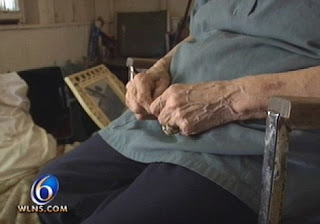
Alzheimer’s disease is the only medical condition that I know of which affects the family of the patient more than it appears to affect the patient themselves. If you break your leg, it’s your problem. You sit at home in plaster; you suffer and you deal with it. Your family have to fetch and carry for you a bit, but that’s it.
The consultant smiled at Mum. ‘I just want to ask you a few simple questions, Rose,’ he said. ‘Are you ready?’ Mum beamed back at him.
‘Tell me, what year is it now?’ asked the consultant. My mother frowned. ‘Let me think’, she said. ‘Is the war still on?’ ‘Do you mean the Second World War?’ he asked. Mum nodded. ‘No, that ended in 1945,’ said the consultant. ‘What year is it now?’ ‘Then it must be after that,’ she replied. ‘It’s 2002,’ he said.
‘Yes, that’s right,’ said mum, who would have agreed if he’d told her it was 1812, and that Napoleon was running the country. I squeezed her hand gently.
‘Who is the Prime Minister?’ continued the consultant. Mum was on firmer ground here. ‘Margaret Thatcher, the milk snatcher!’ she announced triumphantly. ‘No, it’s Tony Blair now,’ he replied. ‘Oh,’ said Mum. ‘I don’t like him.’ The consultant had stopped smiling. ‘I think we need to do some tests,’ he said.
Alzheimer’s disease is the only medical condition that I know of which affects the family of the patient more than it appears to affect the patient themselves. If you break your leg, it’s your problem. You sit at home in plaster; you suffer and you deal with it. Your family have to fetch and carry for you a bit, but that’s it.
Alzheimer’s disease is the only
medical condition that I know of which affects the family of the patient
more than it appears to affect the patient themselves. If you break
your leg, it’s your problem. You sit at home in plaster; you suffer and
you deal with it. Your family have to fetch and carry for you a bit, but
that’s it.
With Alzheimer’s, it’s the other way round. You behave as though nothing has changed, while everyone around you has to deal with the dramatically different person you’ve become.
‘It’s like rolling up a rug,’ the consultant had told me. ‘The end of the carpet nearest to you represents the present, and the other end represents your mother’s childhood. As we begin to roll up the rug, starting from the front, the memories inside the roll are erased and lost for ever, and her reality slips backwards in time. The more we roll, the further back in time Rose has to travel to find a point in her life that she remembers.’
I’d nodded slowly, trying to understand. So that was it, he seemed to be saying. Looking back on it now, I am convinced that my mother’s dementia began the day my father died.
My parents had been married for more than 50 years, during which time they had never been apart.
Mum had nursed my dad devotedly through his final illness and when death eventually came, she had gone into a deep shock. It had been a difficult period for me too, with my own marriage coming to an end at the same time.
Which was why I found myself, a year after Dad had gone, sitting in Mum’s kitchen and asking whether I could move back in with her. ‘Oh, that would be lovely!’ she cried. ‘We could have tea together every day!’
I hadn’t realised quite how much the dementia was starting to ebb and flow in her mind — already much worse than when we’d seen the consultant just a few months before. But once I’d moved back in, filling my childhood bedroom with the remnants of my marriage, her decline became all too apparent.
With Alzheimer’s, it’s the other way round. You behave as though nothing has changed, while everyone around you has to deal with the dramatically different person you’ve become.
‘It’s like rolling up a rug,’ the consultant had told me. ‘The end of the carpet nearest to you represents the present, and the other end represents your mother’s childhood. As we begin to roll up the rug, starting from the front, the memories inside the roll are erased and lost for ever, and her reality slips backwards in time. The more we roll, the further back in time Rose has to travel to find a point in her life that she remembers.’
I’d nodded slowly, trying to understand. So that was it, he seemed to be saying. Looking back on it now, I am convinced that my mother’s dementia began the day my father died.
My parents had been married for more than 50 years, during which time they had never been apart.
Mum had nursed my dad devotedly through his final illness and when death eventually came, she had gone into a deep shock. It had been a difficult period for me too, with my own marriage coming to an end at the same time.
Which was why I found myself, a year after Dad had gone, sitting in Mum’s kitchen and asking whether I could move back in with her. ‘Oh, that would be lovely!’ she cried. ‘We could have tea together every day!’
I hadn’t realised quite how much the dementia was starting to ebb and flow in her mind — already much worse than when we’d seen the consultant just a few months before. But once I’d moved back in, filling my childhood bedroom with the remnants of my marriage, her decline became all too apparent.
I stepped out of the shower one
morning to find my bath towel cut into a series of neat strips, about 12
in all. ‘What’s happened here, Mum? I’d called, holding the pieces up
for her inspection.
‘Ask Aunt Peggy,’ she said. ‘That’s just the kind of thing she’d do.’ ‘Aunt Peggy’s been dead for years,’ I replied. Mum looked at me if I’d hit her. ‘How could you say such a thing?’ she said, tears springing to her eyes. ‘I spoke to her only yesterday.’
That was the brutality of ignorance on my part. Later, when I understood a bit better how Alzheimer’s worked, I’d be much more tactful.
Another time we’d been getting ready to go out and I’d told Mum she needed a coat. Like an obedient child, she went and got a lovely dark blue cashmere affair from the hall; I remembered my father buying it one year for her birthday.
‘Now can we go?’ she said. I turned to look at her. The stitching around the left shoulder seam of the blue coat had been unpicked and the sleeve completely removed.
‘For Christ’s sakes, Mother!’ I exclaimed. ‘It’s only got one f***ing sleeve!’ ‘Don’t you dare swear at me!’ she yelled back. ‘You wait until your father gets home!’
It took me a long time to understand why Mum kept cutting everything up. But I finally found out that Alzheimer’s sufferers will often continue to carry out their once-familiar tasks as a way of anchoring themselves in the confusing sea of their new life.
Mum had been a seamstress all her adult life, so that when she found herself chopping up towels and clothes, in her own mind she was back in her workshop, cutting up fabric for curtains and bedding.
Then, and many other times in the years I looked after her, I realised how often there is a perfectly simple explanation for the apparently inexplicable. It was around Christmas that year when I came home one evening to find Mum watching TV with a huge, headless bird in an armchair next to her. Its enormous drumstick legs were pointing downwards as it defrosted, creating a huge puddle on the chair seat.
‘What’s this, Mum?’ I asked. ‘It’s our Christmas turkey, of course,’ she replied, as though I were an idiot. ‘I bought him from the supermarket this morning. I couldn’t resist him.’
Taken from UK Daily Mail‘Ask Aunt Peggy,’ she said. ‘That’s just the kind of thing she’d do.’ ‘Aunt Peggy’s been dead for years,’ I replied. Mum looked at me if I’d hit her. ‘How could you say such a thing?’ she said, tears springing to her eyes. ‘I spoke to her only yesterday.’
That was the brutality of ignorance on my part. Later, when I understood a bit better how Alzheimer’s worked, I’d be much more tactful.
Another time we’d been getting ready to go out and I’d told Mum she needed a coat. Like an obedient child, she went and got a lovely dark blue cashmere affair from the hall; I remembered my father buying it one year for her birthday.
‘Now can we go?’ she said. I turned to look at her. The stitching around the left shoulder seam of the blue coat had been unpicked and the sleeve completely removed.
‘For Christ’s sakes, Mother!’ I exclaimed. ‘It’s only got one f***ing sleeve!’ ‘Don’t you dare swear at me!’ she yelled back. ‘You wait until your father gets home!’
It took me a long time to understand why Mum kept cutting everything up. But I finally found out that Alzheimer’s sufferers will often continue to carry out their once-familiar tasks as a way of anchoring themselves in the confusing sea of their new life.
Mum had been a seamstress all her adult life, so that when she found herself chopping up towels and clothes, in her own mind she was back in her workshop, cutting up fabric for curtains and bedding.
Then, and many other times in the years I looked after her, I realised how often there is a perfectly simple explanation for the apparently inexplicable. It was around Christmas that year when I came home one evening to find Mum watching TV with a huge, headless bird in an armchair next to her. Its enormous drumstick legs were pointing downwards as it defrosted, creating a huge puddle on the chair seat.
‘What’s this, Mum?’ I asked. ‘It’s our Christmas turkey, of course,’ she replied, as though I were an idiot. ‘I bought him from the supermarket this morning. I couldn’t resist him.’
I read the label on the creature’s
leg. ‘Giant Christmas goose,’ it announced. ‘Will feed 12 people’. We
were just two for Christmas dinner. The day before Christmas Eve I’d got
home to find all my socks pinned to the walls and ceilings of the
house. ‘I’ve been putting up the decorations,’ cried Mum, dancing into
the hallway.
And then there was the imaginary Irish band. I can’t remember quite when they appeared, only that there were six of them — an accordion player, a couple of guitarists, a violinist, perhaps a banjo player and a singer called Michael who had a lovely voice, according to Mum.
I was so grateful to those lads. They would keep Mum entertained for hours, her foot tapping and her body swaying as she listened in her imagination to the music she’d adored as a little girl growing up in Dublin.
And how she loved to look after those musicians! Whenever she made herself a cup of tea, which was often, she’d pour one out for each member of the band as well. It was the same with the sandwiches.
As the months went by, I’d often get home to find every cup and plate in the house in use, with at least eight cold mugs of tea scattered round the house and plates of uneaten sandwiches everywhere. At one stage we were getting through several loaves of bread and three pints of milk every day.
One evening, when we were watching TV after supper, I saw Mum lean over and look at the radiator at the back of the living room.
I watched as she smiled lovingly at it, and nodded once or twice. Her lips moved as though she were saying something, and then she nodded her head again.
And then there was the imaginary Irish band. I can’t remember quite when they appeared, only that there were six of them — an accordion player, a couple of guitarists, a violinist, perhaps a banjo player and a singer called Michael who had a lovely voice, according to Mum.
I was so grateful to those lads. They would keep Mum entertained for hours, her foot tapping and her body swaying as she listened in her imagination to the music she’d adored as a little girl growing up in Dublin.
And how she loved to look after those musicians! Whenever she made herself a cup of tea, which was often, she’d pour one out for each member of the band as well. It was the same with the sandwiches.
As the months went by, I’d often get home to find every cup and plate in the house in use, with at least eight cold mugs of tea scattered round the house and plates of uneaten sandwiches everywhere. At one stage we were getting through several loaves of bread and three pints of milk every day.
One evening, when we were watching TV after supper, I saw Mum lean over and look at the radiator at the back of the living room.
I watched as she smiled lovingly at it, and nodded once or twice. Her lips moved as though she were saying something, and then she nodded her head again.
‘What are you doing, Mum?’ I asked, gently. Her cheeks flushed in embarrassment. She shook her head but did not reply. ‘Why are you talking to the radiator?’ I persisted.
‘She’s asked me not to say anything!’ exclaimed Mum, her eyes filling with tears. ‘It’s the little girl in the radiator.’ Tears were pouring from Mum’s eyes now. ‘She’s all alone in there,’ she explained. ‘She’s trapped and she’s frightened, and I don’t know how to help her.’
I went across the room and put my arm around her. She sobbed into my shoulder. ‘What can I do to help?’ I whispered. ‘You could let her out!’ she cried, and the tears came again. ‘Tell her I said it’s OK, she can come out,’ I replied.
It’s funny how easily you can get caught up in another person’s delusion. After that night, I found myself talking to the little girl in the radiator with Mum on many occasions.
I have no idea whether doing this was good for her mental wellbeing or not. A psychiatrist might say that I was strengthening the delusion by playing along with it, but what was my alternative? At least this way we were sharing precious time together. And for me, that had to be a good thing.
But things were worsening fast. ‘I’m off now!’ she called up the stairs to me one night, after putting on her raincoat, headscarf and gloves. ‘See you later.’
I knew she was going nowhere —her behaviour had been getting more and more erratic lately, and I was having to keep the front door locked and hide the key. ‘It’s quarter past three in the morning!’ I shouted, pulling the pillow over my head.
‘I have an appointment at the hairdresser’s!’ she shouted back. ‘I can’t get out!’ ‘The hairdresser’s doesn’t open for six hours,’ I yelled. ‘Go back to bed!’ Half an hour later, Groundhog-Day-style, Mum was back by the front door. ‘I’ll see you later!’ she called, rattling the handle all over again.
With Alzheimer’s, it’s not just the patients that go crazy. But it was only when a friend found Mum wandering the streets at five in the morning wearing only her nightie and with a pair of broken sandals in her hand that I knew something had to be done. The truth was simple: I just couldn’t cope.
I wasn’t in the house often enough, or long enough, to supervise my mother properly. Even when I was there, like now, she still wasn’t safe.
That afternoon, with a heavy sense of defeat and shame, I telephoned the social worker who had contacted me when mum had first been diagnosed. ‘I’ll come out next week and have a chat,’ she said cheerily.
A few weeks later, after she’d been moved into a home, the staff advised I leave Mum a few days before going to visit her for the first time.
When I did arrive, I found her wandering along a corridor hand in hand with an elderly male patient.
‘Storm’s coming up,’ he announced. ‘Going to be choppy.’ I later learned her new companion had been in the Navy for years.
Mum broke into a huge smile. ‘I have something to tell you,’ she said. ‘I’m going to have a baby!’
For some people, this sort of announcement might have been a shock coming from their 80-year-old mother. But I’d been looking after Mum far too long to be surprised by anything.
‘Jesus, Mum!’ I said. ‘You’ve only been here a week!’ ‘Terry and I are going to call it Martin if it’s a boy and Peggy if it’s a girl,’ Mum continued. ‘We’re very happy, aren’t we Terry?’
And so began a whole new chapter in Mum’s life, and mine too, as she moved between a succession of care homes and hospital wards.
But, the little girl in the radiator remained as firmly rooted in Mum’s consciousness as ever. Dropping in on her one evening, I found Mum kneeling in front of the radiator in her room with a box of chocolates on the floor in front of her. She was holding out a chocolate to the radiator, apparently trying to give it to the little girl.
‘Is she still in there, mum?’ I said. ‘She can’t get out,’ replied mum, over her shoulder. ‘She’s just lost in the dark, and she’s confused.’ ‘Do you think she’s ever going to come out?’ I whispered. Mum looked at me, sadly. ‘I don’t see how she can. She comes from Dublin, you know. But she can’t ever go home, not now.’
‘What kind of things does she tell you?’ ‘She tells me how kind to me you are. She knows all about me, and I know all about her.’ ‘You’ve become very close then, you and this little girl,’ I said.
‘We’re the same,’ replied Mum, simply. I felt a lump swell in my throat as the penny began to drop. ‘Do you know her name?’ I asked, although I already knew the answer.
‘Her name is Rose,’ replied mum. The last piece of the jigsaw had finally snapped into place. ‘She’s you, isn’t she?’ I whispered, my eyes filling with tears that I could not hold back. ‘You’re the little girl in the radiator, aren’t you?’
I thought my heart would break. I now knew why this delusion above all others had persisted through the years, and why the image of a small child, alone, frightened and abandoned in the dark, was the perfect description of the effects of Alzheimer’s itself.
I put my arm around Mum and she put her head against my shoulder. We both started to sob. We stayed there on the floor of her room for a long time like that, just holding each other.
I drove home that night with my soul in shreds. A deep understanding had been forged between my mum and me that day. I felt I might be able to reach her now at some deeper level, and that there was a new future for our relationship.
Sadly, it was not to be. Just days later Mum suffered a severe stroke, followed by two more. On 15 November, 2007, five years to the day after Dad’s death, I got the call to say that she’d gone.
A few days later, when I stood at the graveside, I couldn’t help but smile as I remembered the mum I’d loved so much. I thought about the forest of socks pinned to the ceiling and walls.
I thought about the giant Christmas goose. I thought about Michael and the Irish band, and how their ballads and jigs had transported Mum back to a happier, more romantic time.
And then, in my mind’s eye, I saw the little girl, standing on the other side of the grave. I recognised her straight away from a much-loved photograph of Mum. She was six years old or so, in a pretty pink dress with a matching bow in her hair, and clasping an armful of teddies.
There she was, little Rose, bejewelled with the magic of childhood. Here was the little girl, shining and new, before that vicious thief, Alzheimer’s, had stolen away her future, leaving her alone and frightened in the darkness.
She smiled, and waved, then she turned, and was gone. The little girl in the radiator was free at last.
‘She’s asked me not to say anything!’ exclaimed Mum, her eyes filling with tears. ‘It’s the little girl in the radiator.’ Tears were pouring from Mum’s eyes now. ‘She’s all alone in there,’ she explained. ‘She’s trapped and she’s frightened, and I don’t know how to help her.’
I went across the room and put my arm around her. She sobbed into my shoulder. ‘What can I do to help?’ I whispered. ‘You could let her out!’ she cried, and the tears came again. ‘Tell her I said it’s OK, she can come out,’ I replied.
It’s funny how easily you can get caught up in another person’s delusion. After that night, I found myself talking to the little girl in the radiator with Mum on many occasions.
I have no idea whether doing this was good for her mental wellbeing or not. A psychiatrist might say that I was strengthening the delusion by playing along with it, but what was my alternative? At least this way we were sharing precious time together. And for me, that had to be a good thing.
But things were worsening fast. ‘I’m off now!’ she called up the stairs to me one night, after putting on her raincoat, headscarf and gloves. ‘See you later.’
I knew she was going nowhere —her behaviour had been getting more and more erratic lately, and I was having to keep the front door locked and hide the key. ‘It’s quarter past three in the morning!’ I shouted, pulling the pillow over my head.
‘I have an appointment at the hairdresser’s!’ she shouted back. ‘I can’t get out!’ ‘The hairdresser’s doesn’t open for six hours,’ I yelled. ‘Go back to bed!’ Half an hour later, Groundhog-Day-style, Mum was back by the front door. ‘I’ll see you later!’ she called, rattling the handle all over again.
With Alzheimer’s, it’s not just the patients that go crazy. But it was only when a friend found Mum wandering the streets at five in the morning wearing only her nightie and with a pair of broken sandals in her hand that I knew something had to be done. The truth was simple: I just couldn’t cope.
I wasn’t in the house often enough, or long enough, to supervise my mother properly. Even when I was there, like now, she still wasn’t safe.
That afternoon, with a heavy sense of defeat and shame, I telephoned the social worker who had contacted me when mum had first been diagnosed. ‘I’ll come out next week and have a chat,’ she said cheerily.
A few weeks later, after she’d been moved into a home, the staff advised I leave Mum a few days before going to visit her for the first time.
When I did arrive, I found her wandering along a corridor hand in hand with an elderly male patient.
‘Storm’s coming up,’ he announced. ‘Going to be choppy.’ I later learned her new companion had been in the Navy for years.
Mum broke into a huge smile. ‘I have something to tell you,’ she said. ‘I’m going to have a baby!’
For some people, this sort of announcement might have been a shock coming from their 80-year-old mother. But I’d been looking after Mum far too long to be surprised by anything.
‘Jesus, Mum!’ I said. ‘You’ve only been here a week!’ ‘Terry and I are going to call it Martin if it’s a boy and Peggy if it’s a girl,’ Mum continued. ‘We’re very happy, aren’t we Terry?’
And so began a whole new chapter in Mum’s life, and mine too, as she moved between a succession of care homes and hospital wards.
But, the little girl in the radiator remained as firmly rooted in Mum’s consciousness as ever. Dropping in on her one evening, I found Mum kneeling in front of the radiator in her room with a box of chocolates on the floor in front of her. She was holding out a chocolate to the radiator, apparently trying to give it to the little girl.
‘Is she still in there, mum?’ I said. ‘She can’t get out,’ replied mum, over her shoulder. ‘She’s just lost in the dark, and she’s confused.’ ‘Do you think she’s ever going to come out?’ I whispered. Mum looked at me, sadly. ‘I don’t see how she can. She comes from Dublin, you know. But she can’t ever go home, not now.’
‘What kind of things does she tell you?’ ‘She tells me how kind to me you are. She knows all about me, and I know all about her.’ ‘You’ve become very close then, you and this little girl,’ I said.
‘We’re the same,’ replied Mum, simply. I felt a lump swell in my throat as the penny began to drop. ‘Do you know her name?’ I asked, although I already knew the answer.
‘Her name is Rose,’ replied mum. The last piece of the jigsaw had finally snapped into place. ‘She’s you, isn’t she?’ I whispered, my eyes filling with tears that I could not hold back. ‘You’re the little girl in the radiator, aren’t you?’
I thought my heart would break. I now knew why this delusion above all others had persisted through the years, and why the image of a small child, alone, frightened and abandoned in the dark, was the perfect description of the effects of Alzheimer’s itself.
I put my arm around Mum and she put her head against my shoulder. We both started to sob. We stayed there on the floor of her room for a long time like that, just holding each other.
I drove home that night with my soul in shreds. A deep understanding had been forged between my mum and me that day. I felt I might be able to reach her now at some deeper level, and that there was a new future for our relationship.
Sadly, it was not to be. Just days later Mum suffered a severe stroke, followed by two more. On 15 November, 2007, five years to the day after Dad’s death, I got the call to say that she’d gone.
A few days later, when I stood at the graveside, I couldn’t help but smile as I remembered the mum I’d loved so much. I thought about the forest of socks pinned to the ceiling and walls.
I thought about the giant Christmas goose. I thought about Michael and the Irish band, and how their ballads and jigs had transported Mum back to a happier, more romantic time.
And then, in my mind’s eye, I saw the little girl, standing on the other side of the grave. I recognised her straight away from a much-loved photograph of Mum. She was six years old or so, in a pretty pink dress with a matching bow in her hair, and clasping an armful of teddies.
There she was, little Rose, bejewelled with the magic of childhood. Here was the little girl, shining and new, before that vicious thief, Alzheimer’s, had stolen away her future, leaving her alone and frightened in the darkness.
She smiled, and waved, then she turned, and was gone. The little girl in the radiator was free at last.
- Extracted from the Little Girl In The Radiator by Martin Slevin, to be published by Monday Books on August 6 at £9.99. © 2012 Martin Slevin.
July 29, 2012
BY dB0
Comments
Who knew that Norma
Jeane took a standard style and made it her own. The typical way to wear your front-buttoned cardigan was over a white blouse with a prim collar. Marilyn removed the bra and camisole worn under
it, turned it around, and buttoned it up
the back. The sweater clung to her curves and she called it her ‘magic
sweater’.
7/18/2012
7/14/2012
7/12/2012
7/11/2012
7/07/2012
July 07, 2012
BY dB0
Comments
Webster Hall, East Village, around 8.15pm
A Crazy ex-band member stormed into a dressing room and slashed two members of his former band, the Cro-Mags, with a hunting knife before a gig.
Harley Flanagan, 42, former bassist, and one of its founders, and a Jiu-Jitsu expert, was taken down by security and suffered a broken leg, before police handcuffed him to a chair.
Webster Hall, Where all the shit goes down
7/05/2012
July 05, 2012
BY dB0
Comments
To get fuller lashes
THE TRICK:
‘Apply your mascara before any other eye make-up,’ advise Jean and
Jane. ‘To really fill out thinning lashes, lift your eyelid right up as
you brush your mascara on. First, holding the brush horizontally, comb
through your eyelashes. Then use the tip of the brush to work the
product from the base of your lashes and extend right to the ends. WHAT TO USE: Benefit’s They’re Real Mascara is the world’s best-selling premium mascara, with one tube sold every six seconds. The appeal is in the brush, which has a tiny ball at the end and can be used vertically and horizontally. When this mascara on, it looks like false lashes — only better.
To hide crow's feet
THE TRICK: After
applying foundation, draw a big dot with a brightening pencil at the
outer corner of your eye. Use your fingers to gently blend it up towards
the end of your brow, as this eliminates the downward drag of crow’s
feet. To make your eyes look even younger, draw three small dots in the inner corner of the eye and dab with your finger to blend.
WHAT TO USE: A pencil is better than a liquid concealer. Jean and Jane recommend Benefit Eye Bright Pencil which is a flattering pink tone. Or try Pixi Eye Bright Liner which has a twist-up point and a nude shade to brighten the whites of your eyes.
An instant brow lift
THE TRICK: You
need a steady hand for this. Take your thumb and forefinger and ‘open
up’ the eye area so you can use your other hand to draw a very fine line
— using brow wax — under the arch of the brow, following its natural
curve. Use a long-handled brush for best results. Next, fill in any gaps with brow powder. Start with a darker shade in the corner of the brow, going to a lighter one on the outside of the brow. Stub the product in using a brush, as this gives a more natural effect than painting it on.
WHAT TO USE: As we age, we lose colour and definition in our brows, so a product that both shapes and shades them is a good idea. Naturally, Jean and Jane recommend Benefit Brow Zings, a dual palette with wax to shape and powder to fill in brows.
A good budget alternative is the GOSH Eye brow kit which contains three brow powder shades and a wax cream to shape.
To brighten eyes
THE TRICK: Get
rid of dark circles for an instant glow. ‘Use the pad of your middle
finger to apply a heavy-duty concealer,’ say Jean and Jane. ‘Pat it on
gently underneath your eyes and it will stay put for longer.’ WHAT TO USE: A yellow-based concealer is best for camouflaging dark shadows. Try Bobbi Brown’s Creamy Concealer, or Benefit Lemon Aid, a pale yellow, colour-correcting eyelid primer which helps to hide redness on your eyelids, but is also excellent for covering dark circles. It can be worn under or over make-up.
To ease smile lines
THE TRICK:
Known as ‘marionette lines’, many women moan about the wrinkles that
run from the nose to the mouth when smiling. Jean and Jane recommend
applying your normal foundation, then using an illuminating pencil to
draw three lines, like cat’s whiskers, either side of your nose in the
opposite direction of your lines. Blend well. Mad as it sounds, this
trick really works.WHAT TO USE: These pencils were created to highlight brow bones, but they disguise smile lines brilliantly. Try the Arch Enhancer by Shavata which has a light-reflecting pigment, or Benefit’s High Brow Pencil which is super-creamy and so especially effective on dry complexions.
To find your perfect lip colour
THE TRICK: This
sounds crazy, but you need to compare your lipstick to the colour of
the flesh on the inside of your cheek. Use a hand mirror to check the
colour — your lipstick should be two shades darker.Jean and Jane say this is the same colour of your lips when you were 16 years old. I was sceptical, but it works — the colour match is really flattering. Avoid using a lip liner; you get a more natural look without it.
WHAT TO USE: A handbag-sized mirror, such as a mini silver effect travel mirror is a must-have when shopping for lipstick.
Taken from UK Daily Mail
7/04/2012
July 04, 2012
BY dB0
Comments
A 50 million project to refurb McCarren Pool and reopen it after 30 years, blocks away from where we used to live, broke out into chaos.